Paddy Dudley
Last year, Bob Dylan came to the United Kingdom. As a huge fan of his, I was dumbfounded, especially considering his age. I was offered the opportunity to go and see him, and I didn’t take it. Here’s why.
As a big fan of Bob Dylan and as someone who likes to think he has a unique sense of perception, I have noticed that both his music style and voice has changed dramatically over the years, and not for the better – though the latter is hardly within his control as time goes on.
So as to not alienate those who don’t have a Bob Dylan poster, painting, shirt, keychain, book of lyrics, autobiography and soon a tattoo (I’m not ashamed), I’ll provide some context.
A brief history of genius
Bob Dylan is a folk/rock artist who started and blew up in the 1960s and 70s with his satisfyingly simple chords and guitar pickings that support the real star of his show – his lyrics. I can’t get over how beautiful and mesmerising they are. Emotions that I’m fortunate to have never experienced seem entirely familiar and painful. The imagery is so vivid that I’m led to yearn for some hypothetical person I’ve never met or even dreamt of.
For 3 minutes and 34 seconds I’m sharing Dylan’s pain. (Side note: I’m thankful that none of his 15-minute monologues that are disguised as songs are about love, otherwise my mood would transition from awe into slight boredom.)
The realisations he describes about the unapologetically and uncontrollably changing world around us are daunting and yet unavoidable. His observations are made clear through his metaphors. Things I would normally be blind to are suddenly apparent and I see the world through…whatever the opposite of rose-tinted glasses is.
Some dreams are best left alone
Dylan’s voice, unfortunately, is mocked routinely. After all, it is nasally and whiny. Listening to his live performances online quelled my excitement very quickly.
Ignoring the economic obstacle (£150 for a small theatre in Leicester is a joke), the idea of Dylan performing live today, with his changing voice and style, seems like a poisoned chalice.
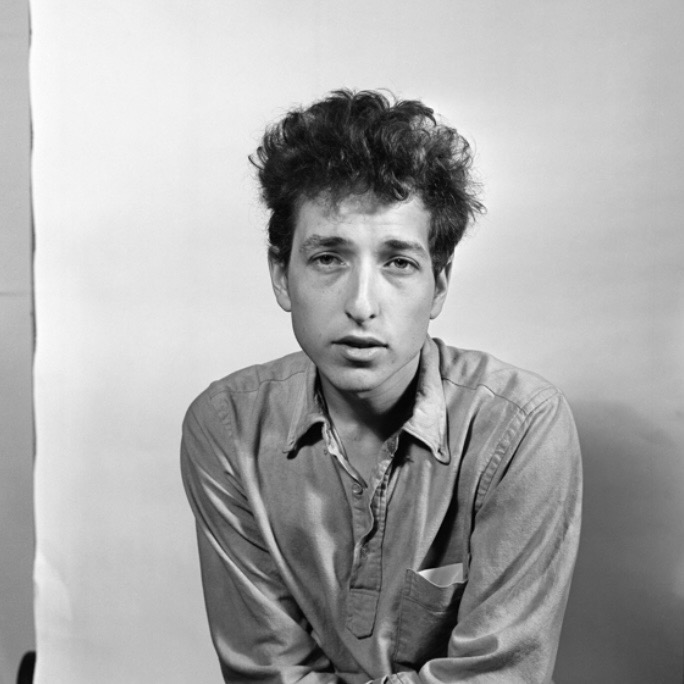
I want to hear 60s Dylan. I want to see him in a corduroy jacket in curly hair like on the cover of Freewheelin’ Bob Dylan while slightly high. But that’s not him anymore, and hasn’t been for a long time.
It affected me more than I realised to delete my ‘Yes’ response to a friend’s invitation to see him live. Looking back, I wish I had gone just to see him, to see him in real life just once. To see the man whose music I’m so attached to sing his songs of pure truth and beauty is my dream. But I knew it wouldn’t be like that in reality, so I didn’t go. I didn’t want to spoil the idea of him that I have in my head.
What do we do when our idols age?
This isn’t a new phenomenon. Artists across the globe and across cultures suffer from the same problem. Not everyone can be a genetic marvel like Mick Jagger who seemingly never runs out of energy (even if that energy and charisma comes from a small baggie wrapped in paper).
Elton John has some mega tunes. Real bangers. However, seeing him struggle to move around and sing is painful. It reminds me of that feeling you get when you see your grandparents need help or forget who they are. Maybe that’s extreme, but the situations feel similar to me.
It’s a troubling and confusing mix of emotions. All in all, it’s a combination of a sort of grief knowing that you will never be able to see them in their prime, sadness and pity that they are getting older and struggling to do the things they once thrived doing and also wanting to keep the dream alive in your own head – a bubble that can be burst so easily – and the feelings of guilt and regret that might come with that.
Have you ever felt the same? Has this happened to an artist or celebrity you once adored or that you are too young to have seen in their prime?