The man, the myth, the mechanic.
An introduction to ‘Operation Van’
It was the summer of 2020 – the first lockdown – and I’d just finished a mini project making a surfboard bag out of my old rugby shirts. I needed a new project.
I decided on the van for a few reasons. First, from what I’d seen online, it was the best way to explore the United Kingdom and Europe. Second, during the conversion I knew I would learn many practical and project management skills that I could use for the rest of my life, like basic plumbing and carpentry. Finally, I knew that the van would mean I could spend time with friends that I would otherwise never get.
The tipping point was really boring and sensible. I calculated the costs to build the van and estimated the value of it once converted, and I realised it would roughly double in value if I did a good job – crucially, on a good van. That took away the fear of blowing all this money.
It took 133 days across three summer holidays (30 days of which were spent doing research), but it is now finally done.
The pursuit of creative satisfaction
We’ve heard that you can paint and sew, and now we know you can build a van. Can you give an example of how you have used your creativity to solve problems throughout this journey?
Many aspects feel creative when I look back on it. For example, we designed a fold-out kitchen for more worktop space. Also, having a non-permanent hob that plugs into the gas – much like a school science lab – has been a life saver. Those were both creative solutions all bashed out by chatting about the practical problems over family dinners.
A major one was that I wanted to maximise space under the bed so I could fit all my gear (ie, kitesurfing equipment, an inflatable kayak, golf clubs, wetsuits… the list goes on). However, to build the bed extra high meant hours standing in the van with my stepdad working through plans and drumming up ideas as to how we could do it. I couldn’t find anyone online with a similar design, so we were starting from scratch.
More generally, in dogged determination to solve problems, I guess I have been creative. This process involved a lot of talking to people to generate ideas and figure out how whatever it was we were trying to build could actually be built. Finding the people who could give me these answers meant talking to anyone and everyone. I used to go to the beach when it was windy and do mini interviews with people who had conversions that they’d taken to Hayling Island for the day.
It should also be noted that although I can sew, I am still shockingly bad.
Creativity is all about collaboration. How did you communicate your vision to the different people who helped you bring Reggie to life?
Everyone said the same thing on arrival: “I have no idea what I’m doing, so point and direct and I’ll be an extra pair of hands.” This was immeasurably helpful. There were many days I couldn’t do jobs that I wanted to do simply because I lacked an extra pair of hands – so delegating was easy in those circumstances.
However, the real communication took place at the dinner table. For months, most evening meals were spent looking at my sketches and planning next steps. We would cut up cereal boxes to form the wood joints and visualise how I might build the kitchen frame, the bed or the chair. My mum, stepdad and brother were Reggie’s design team’. Simply put, the van would not be finished today without those dinner brainstorming sessions.

Building the van
You’ve reached 500+ followers! Did you aim to capture a wider audience when you started this account, and how does it feel to have so many want to join you on this journey?
The aim of the account was to act as a log and a way to update my bafflingly big family on my progress. I’m not sure I’m the right kind of bloke to be Instagram famous and get astronomically big, but it is lovely to receive so many nice messages from friends and family when I post. Often, friends I haven’t spoken to in years see a place I’ve visited or something I’m up to and drop me a message. It’s been a great way to stay in touch with so many different people.
While converting the van, well over 20 people volunteered and gave their time to come and help with the build. As much as it was my journey, everything in this van – honestly, every inch – had help from others. Reggie is more of a collage of the parts that everyone played; I just stitched it together. As cliché as it sounds, it was a shared journey and a real community project.
People from every avenue of my life came and got involved. From school, Henry Massey helped with the ceiling. Harry Webb, Joe Hunter and Smithy all played their parts. Jamie Mellor practically worked full-time in the summer of 2022. My cousin Angus not only did two days putting in a shift to finalise some of the finishing touches but did a 10-hour round trip just so I could pick Reggie up in the first place! Friends from university came from miles away to help; even people from my time in Canada came to assist.
How does the solitude of the van compare to living with friends or family?
I am very lucky in that my brain seems to instinctively focus on the good elements of whatever situation I am in. When I’m living at home, it’s dog walks and chatting to my family over dinner. When I’m in the van it’s having the freedom to get up at 4am or 9am depending on the weather. It’s the freedom of being able to plan a whole day, get distracted by someone’s recommendation and spend the rest of it looking for some cave that a guy in the pub told me about the night before.
Another thing that has struck me about life in the van is that, even though I am by myself, I always have company. Whether it’s other van people or, more likely, someone at a café simply interested in why I’m there, there’s rarely a day without interaction. Even on those days, I make time to call a friend and have a catch-up over their lunch break.
I do love my own company though, and a healthy amount of solitude is something I have always valued. I love podcasts and audiobooks and can very happily get lost in those.
What’s been the biggest highlight of this journey so far (be it a trip, life lesson or otherwise)?
A holiday highlight would be discovering the white sands of Reef Beach on the Isle of Lewis and kitesurfing alone in perfect conditions. I’d travelled so far and spent so long thinking about being able to go on kitesurfing trips that it had become a family joke that I couldn’t actually kitesurf, and that I liked prolonging the build so I didn’t have to actually go on the adventures. Finally, after three years, I’d made it. The sun was out and the water was crystal blue. There was one other person on the beach. It was surreal. The realisation hit me that my weekends no longer had to be spent under the van in a steamy face mask and eye protection or contorting my body into agonising positions to get a final screw in place. They could be spent doing this.
On a more emotional level, I don’t think that I experience stress like I used to. That’s been a huge learning curve. At school and university I used to get extremely worried and stressed about what I didn’t know and how much I had to do, and there was always more to do. Since doing the van – where every single little piece was entirely unknown to me – I have realised that I can relax and trust that although I very rarely know how to do something, I will always be able to find out.
Your documentation of the building process has been thorough. What content can we expect to see from you now that Reggie is on the road?
Adventures with varying production quality. I am not an influencer and don’t intend to be, but making higher quality content is really fun for me. I can almost guarantee that no one gets as much out of the page as I do. I love replaying the videos of trips with mates.
The downside is that the higher quality content, although more fun to rewatch, does eat more of my time on the trip – getting the footage and then editing it. It’ll be about finding a balance of the least time required to produce a decent-quality video.
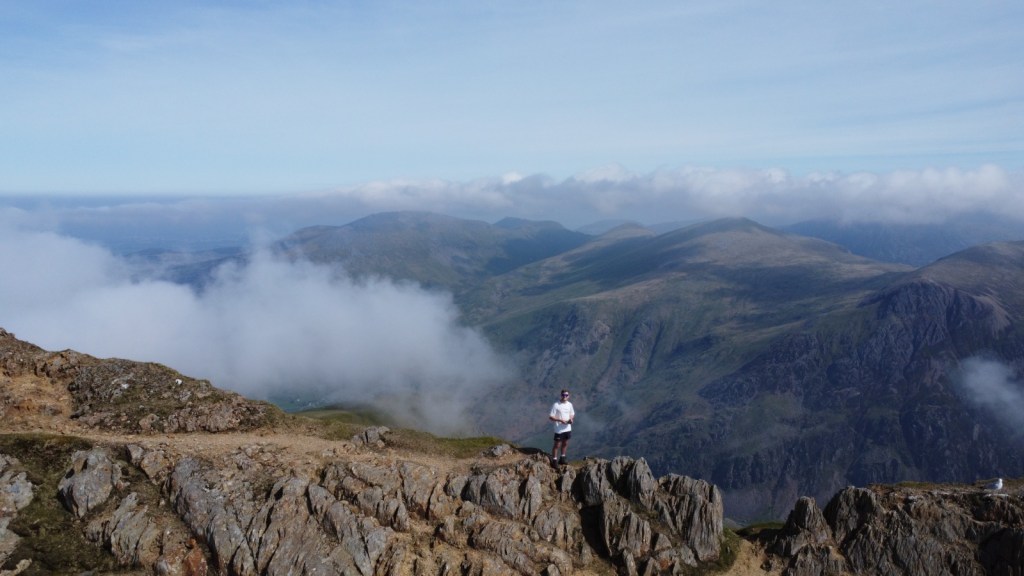
I’m starting off in the United Kingdom. This summer, so far, has been Wales and Scotland. I spent three weeks in Wales and then four weeks in Scotland, working my way north to south through the Outer Hebrides. Next year, the hope is to spend time in Ireland.
After that, Europe. I’ve been told many, many times by countless different van owners that because Europe is so well-kitted out for motorhome adventuring, if you do a journey anywhere in Europe, travelling the United Kingdom then feels like too much effort. I’m starting with the difficult trips first and look forward to visiting countries that are more welcoming to vans in the future.
What would you do differently if you were to start again from scratch, and why?
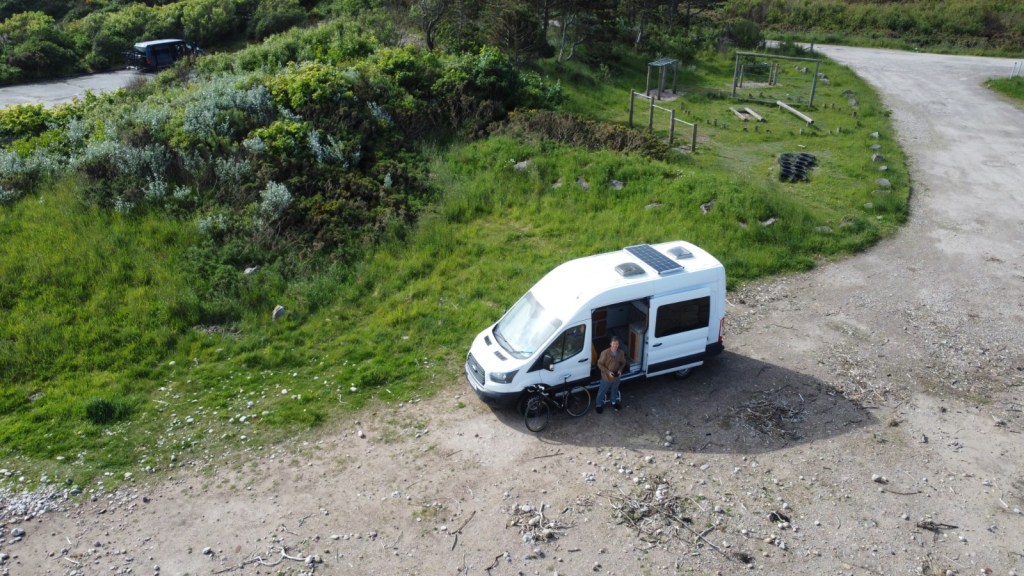
If I were to build another van, I would likely not go as big, simply because I will never have as much free time to do a project this big again. Reggie has a full-sized double bed, a working kitchen, a shower with hot water, enough LPG gas to last months, 70 litres of water tanks, a fridge…
I bit off more than I could chew, no doubt, but I had three years to chew.
I would get a smaller van and realistically have it done in two to three weeks. They are easy to zip about in and are more easily hidden, which is useful in England. The English hate vans, the Welsh quite like them and the Scottish positively encourage them. Exploring more of England’s west country would be considerably easier in a smaller van.
In terms of how I would build this one differently… Great question. There’s one reading light that is about 30 centimetres from where I would ideally like it. My roof layout is shocking. It was the first thing I did, and I didn’t fully consider the consequences of where I put things. Due to this, it will now be very tricky for me to add a roof rack for gear or surfboards.
I hadn’t thought about that in ages. I think it’s possible. Damn, now I have to go back to the drawing board and plan some extensions.
What’s the next adventure for you and Reggie?
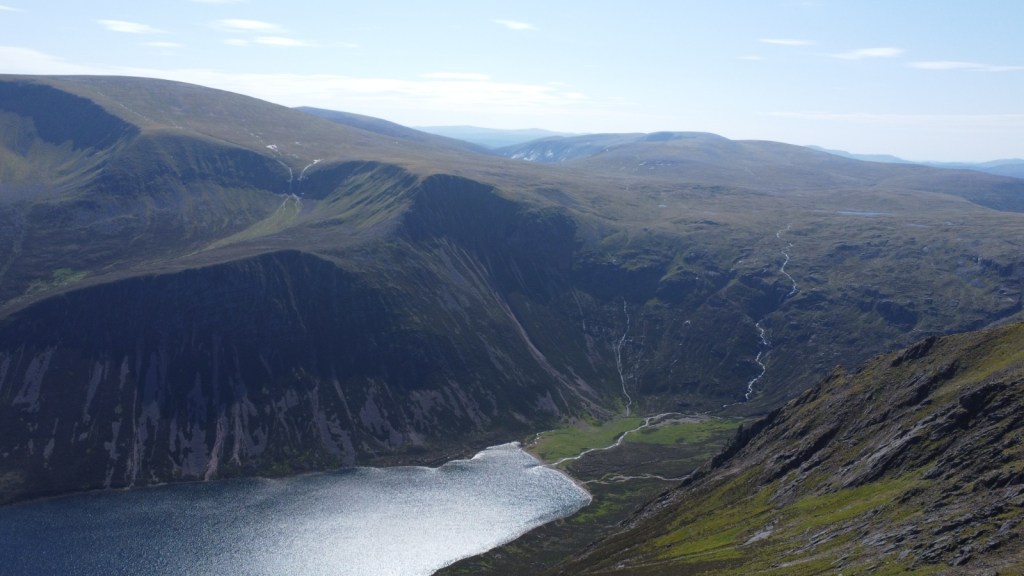
Well, I’m currently living a bit of a dream life. I am travelling around Wales and Scotland. I’ve just started a 12-day section going from the top of the Outer Hebrides to the bottom. Wales and Scotland have blown me away. The beaches are incredible. North Wales resembled pictures that I’ve seen of New Zealand. Pembrokeshire had far nicer beaches than I ever thought I’d see in the United Kingdom. The mountains in Scotland were fiercely big and I can’t wait to come back and ski down them.
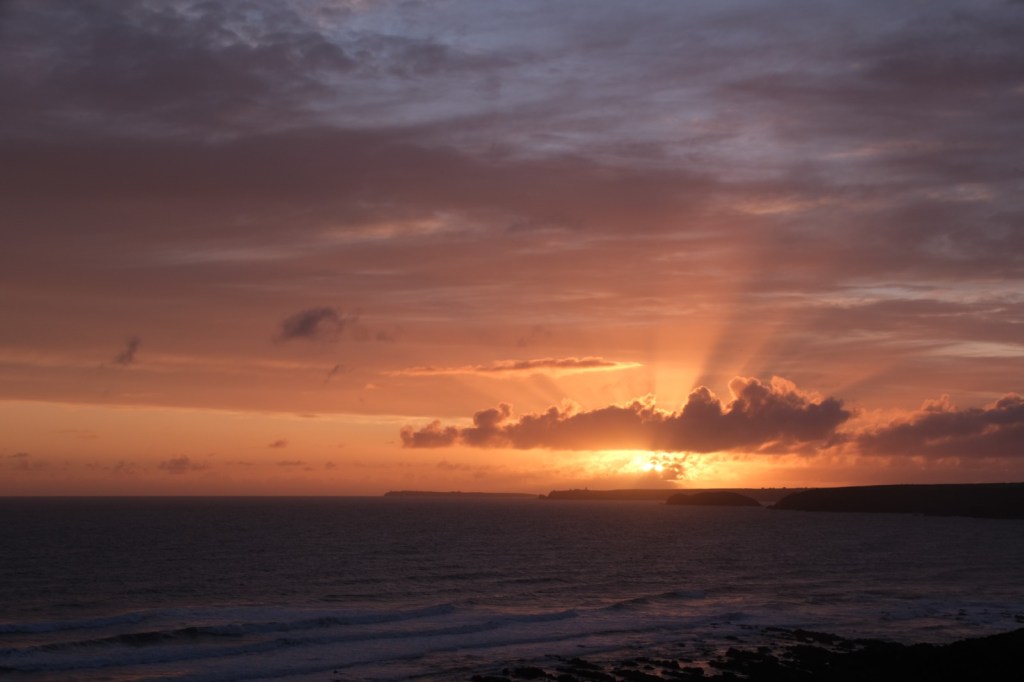
And finally, some rapid-fire questions
Three pieces of advice for anyone ambitious enough to convert a van
Don’t hold back! Start small, then gradually get bigger. If you have access to a car, buy a tent box and be out adventuring within a couple hours of prep. If you like that, get a small van and convert that in 20 days or less. Then go big. If you want to.
Tent boxes are expensive, but they are a fraction of the cost of a van. Also, you’d get a great proportion of your money back when you come to sell it. Go halves with a friend – it would be, with some camping gear included, about £800 each. No small amount, but a van would be at least 10 times that price and you get a huge amount of freedom.
Two quotes you live by since converting Reggie
- Trust the process.
- Be more lucky.
One top hit that encapsulates this adventure
Although I’ve listened to an unhealthy amount of Olivia Dean during the build, I would often just loop ‘Audrey Horne’ by Golden Retriever for hours while working on the project and now that it’s finished, while I’m driving.
Follow George’s adventures on Instagram