Sienna Bentley
I became a fan of Glass Animals in 2016 when I discovered the band’s second studio album How To Be A Human Being, which remains one of my favourite albums of all time. No skips. It’s a fantastic concept album that tells visceral stories that are so unusual but so quintessentially human at their core. It recounts tales that the band picked up from strangers while on tour, and it’s this fact that drives the message of the album home: we are all human, and we’re not alone. I subsequently dove deeper into its discography and found that ZABA was, similarly, a real work of genius.
Their third album Dreamland – released in 2020 – saw Glass Animals skyrocket in popularity with the explosion of success of single ‘Heat Waves’. I, in fact, did have this song on repeat in the middle of June.
Many considered Dreamland to be a disappointment as it reflected the band’s transition into more mainstream pop. I understand this to an extent; how do you build on the sheer masterpiece that is How To Be A Human Being? However, I didn’t mind the switch-up. It definitely felt more like an experimental exploration – dipping their toes into the waters of pop while still retaining the band’s earlier essence. Although I attributed the album’s much more electronic instrumentation to frontman Dave Bayley’s home-producing over lockdown, I still found songs like ‘Space Ghost Coast to Coast’, ‘Tokyo Drifting’ and ‘It’s All So Incredibly Loud’ to be reminiscent of the album’s predecessor with hard-hitting lyrics and bold sounds.
So, as a defender of Dreamland and long-time fan of the band (and excited to be seeing them at the O2 Arena in November) I had very high hopes for their latest album, I Love You So F***ing Much.
Emphasis on “had”.
Playing it safe
Upon first listen, my initial thoughts were that a lot of the songs are very similar to one another – to the point where you could often sing another of their songs over the top. Even with fresh ears I was duetting ‘Show Pony’ and ‘White Roses’ with ‘Heat Waves’, and ‘Creatures in Heaven’ worked very well alongside ‘How I Learned To Love The Bomb’.
To me, this indicates that they – intentionally or otherwise – were playing it safe. This is disappointing for a band that, I think, finds its genius in risk. While it is unsurprising that they would try to replicate ‘Heat Waves’ given its incredible success that thrust the band into the spotlight, I didn’t expect it to be quite so blatant, and on almost every single track.
One thing that Glass Animals has always done so admirably is give each track in an album its own persona. Every song fits in with the theme perfectly, but works so well as an independent story that has completely its own energy. This is, tragically, what has been lost in the making of this album.
Indeed, it is the lack of variety that made the album fall short of interesting for me. The sudden cut-off at the end of ‘whatthehellishappening’ is unexpected, yes, but this feature doesn’t add anything of real value – it feels more like it’s there to be different for the sake of it.
‘On the Run’ as a track is fine; I really wanted it to switch up in the middle or do something interesting, and it didn’t.
‘Wonderful Nothing’ is when I thought to myself, “finally”. Four tracks in, we’re catching a glimpse of the band’s capabilities. I like this track a lot, and I really wanted the rest of the album to ride that wave. Spoiler alert: it doesn’t.
Now, I’m a very big believer in the idea that it takes multiple listens to a song or an album to be able to form a fully fledged opinion. So, I gave it some more airtime. And then a little bit more. Sadly, my opinions haven’t changed.
Lyrical complexity
While I wouldn’t be hugely opposed to a full move away from their woozy eccentricity into pop music – if such a transition made sense – it sounds as though they’ve just replicated the style that made them big. The depth and complexity of their older albums, both lyrically and sonically, seem to be lost. The subject matter explored in How To Be A Human Being is fascinating, raw and frank – and while I Love You So F***ing Much is intended and marketed as a more personal and introspective body of work, the lyrics don’t feel truly vulnerable or honest.
I keep thinking that the last track on the album, ‘Lost In The Ocean’, is trying too hard be ‘Agnes’, the final track on How To Be A Human Being. This feels insulting to ‘Agnes’, which is so heart-wrenchingly sad it makes me cry every single time I listen to it. The lyrics in this album are simply not soliciting as strong or as wide a range of emotions from me as I expected from Bayley as a phenomenal songwriter.
Visual confusion
As an aside – and as someone who is as intrigued by visuals as much as sound – I’m just a little confused. I Love You So F***ing Much is apparently an album about love in all its different forms, so can someone please explain to me why one of their merch items is a cassette of the album encased in a toilet seat? Am I missing something here?
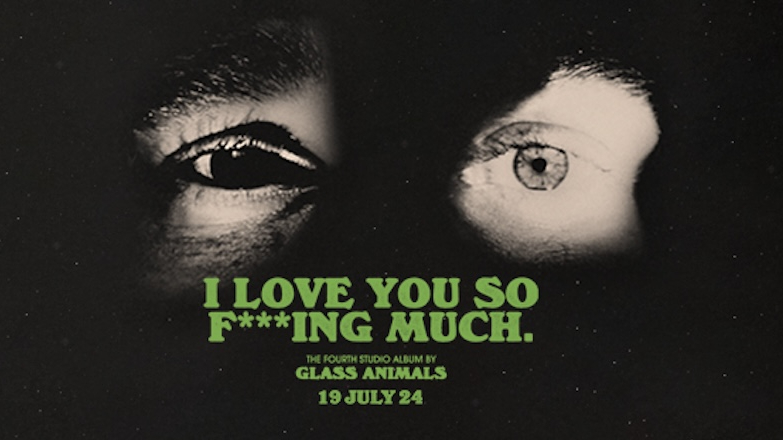
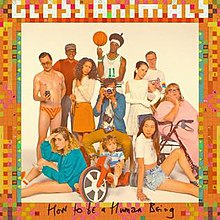
The album cover also doesn’t make sense to me. Unlike with their older work, I can’t as easily make the connection between the cover and the songs. As I mentioned, the album has been heavily marketed as an exploration of love in its various and many capacities (dappled with references to outer space) but I would never be able to ascertain that if presented with the visuals alone.
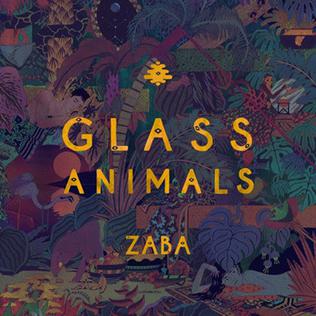
Their first studio album ZABA follows a young boy navigating a bizarre jungle, in which he finds himself facing vividly described creatures. The theme of this body of work is derived from Bayley’s favourite childhood book, The Zabajaba Jungle. This is clearly reflected in the cover art, an abstract forest with animals and muted colours, which perfectly complement the eerie sounds and mellow vocals.
Similarly, the album cover for How To Be A Human Being displays personas from the various tracks; all from different walks of life, with different journeys and stories to tell.

Key takeaways
Scathing review aside, I really do like some of the tracks on this album and enjoy them independently as standalone tunes.
Perhaps I am a creature of habit and am less open to change than I’d like to believe. Or perhaps I was just naive to think that the band wouldn’t evolve. But if you are a relatively new fan of Glass Animals and haven’t taken a dive into their discography pre-Dreamland, I’d highly recommend expanding your horizons – away from space and back down to earth.
My favourite songs on I Love You So F***ing Much (in order of appearance):
- ‘Creatures in Heaven’
- ‘Wonderful Nothing’
- ‘A Tear in Space (Airlock)’
- ‘How I Learned To Love The Bomb’