Sienna Bentley
It’s a pretty regular Wednesday afternoon for me – I’m sitting in the office of my corporate nine to five, eating my (disappointing) salad and scrolling through Dazed. I like to write or read during my lunch hour, and right now, I’m doing both – I simply had to write a response to the article I just came across. The piece was titled: “Why some people are quitting music”, and although I assumed that must be clickbait, I immediately said to myself (yes, aloud), “this is going to be the dumbest article I’ve ever read”. I do stand somewhat corrected, but let’s talk about it.
It opens with an anecdote of a 27-year-old former music lover, Shaz, who has “quit listening to music”. Like, altogether. How stupid, I thought. Shaz explains that she used music to distract herself from her real feelings. Quitting it (what is it, cigarettes?) frees her from a passive state of being.
Indeed, a lot of people – myself included – use music as a form of escapism, but I don’t think cutting it out of your life entirely is the best way to become more present. Music is ultimately a way to connect with others. Not to invalidate Shaz’s experience, obviously, but I would argue that it’s not necessarily a distraction to avoid confronting your emotions, but rather a means to feel less alone in them.
Plugging in to disconnect
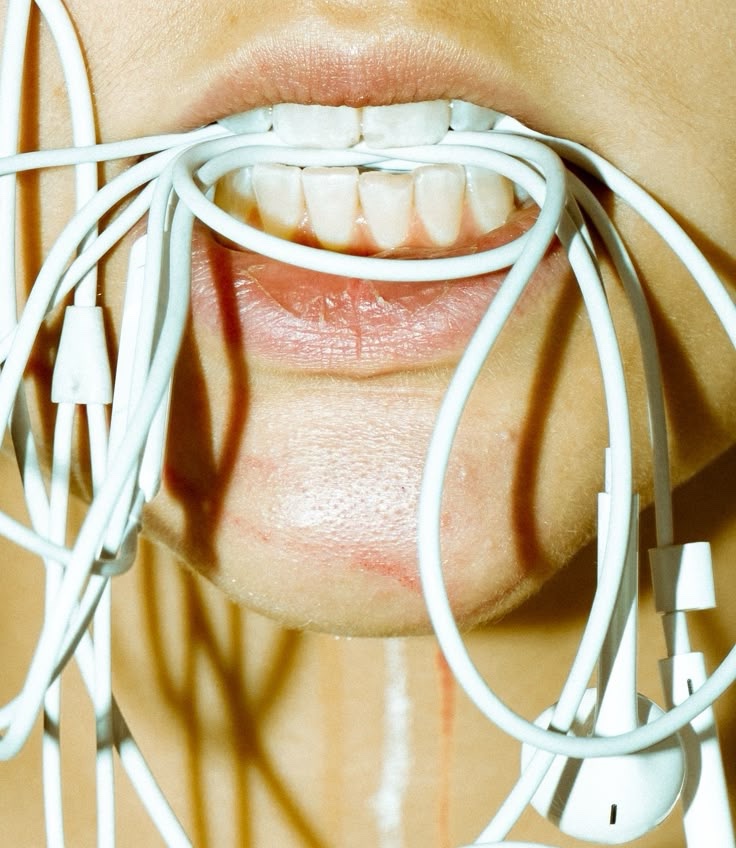
I don’t appreciate the way music is framed as an underlying issue to a wider problem. Yes, relying on your headphones to avoid interacting with people on the tube (and panicking when you realise you’ve left them at home – we’ve all been there) is a bad habit and there is an interesting discussion to be had around using an inherently connective art form to avoid connection, but don’t blame the art form.

Of course, the way we engage with music has changed. With algorithmic playlists to provide a soundtrack to every mood under the sun, music does risk simply becoming filler background noise. But to that, I’d emphasise that maybe it really is that damn phone. We have become so insular as a society that concepts of real connection and intense experiences – even just silence itself – become terrifying. In that sense, I agree with the call to “unplug your headphones”, but to say that “too much music is bad for you” is inaccurate and dismissive of the profoundly impactful nature of it.
The article goes on to say that music is essentially an addiction, and to replace it, young people are turning to podcasts or audiobooks. While I’m all for enriching and expanding one’s intellect and nurturing one’s interests (hello, bite mag), this doesn’t solve the problem of escaping the real world. It simply frames music as the villain. People are still using their headphones for hours a day, they’re just avoiding connection with a different medium. Music isn’t numbing the mind.
A fear of silence
Despite being an avid music lover and spending a lot of time listening to music, I have never considered myself to be reliant on it. I’m pretty content with being alone with my thoughts, and, full disclosure, I actually enjoy having conversations with strangers – but now I’m stopping to consider whether it has in fact become a crutch and I just haven’t realised.
I suspect it probably comes across in my tone, but in case I’m wrong (rare) — I’m very stubborn (sue me). My reluctance to transition away from using wired headphones means that my ability to listen to music outside of the house has somewhat of a shelf life; they simply don’t last very long. I’ve been through three or four sets of earphones since I moved to London last January. My latest pair have just broken, and I am too stubborn (and/or lazy) to go and buy another.
This means I’ve been music-less on my commute for over two weeks now.
I honestly can’t say I’ve noticed a profound difference in the way I process thoughts – compared to Shaz, who, without music, feels like she has more clarity to think. “I’ve become so much more reflective simply because I’m no longer in this daydream state,” she says.
These past two weeks, sometimes I’ll be completing mundane admin tasks at work and wishing I could listen to some music, but I don’t find myself longing for an escape or a distraction.
I can see why this might not be the case for a lot of people. Fear of introspection is real. We don’t want to face the harsh realities of the real world. These days, especially since we have learned how to distract ourselves through mindless scrolling on TikTok, or in my case Instagram reels (yes, I do have a superiority complex), it’s never been easier to stop thinking. And why would we want to think? The world sucks. It’s completely understandable that people would turn to music as one way to switch off.
We also don’t want to be perceived – and I don’t think that’s a new thing. The Dazed article references a 2021 study by audio brand Jabra, which found that 38% of UK headphone users wore them specifically to avoid talking to others. But why is that? I get that in the United Kingdom we’re antisocial as a people, but this seems extreme.
Like I said before, I blame technology. As a 2024 Medium article puts it: being glued to our phones stops us from connecting deeply with others. We might physically be there, but mentally somewhere else. In an interview with Jill Suttie, MIT sociologist Sherry Turkle says:
Cell phones make us promises that are like gifts from a benevolent genie—that we will never have to be alone, that we will never be bored, that we can put our attention wherever we want it to be […] The thing people want most in their social interactions [is] that feeling that you don’t have to commit yourself 100 percent and you can avoid the terror that there will be a moment in an interaction when you’ll be bored.
A happy medium
I’d rather classify this issue as a loneliness epidemic, fuelled by headphone usage. I have always been an advocate for putting down the screens or taking out the earphones and talking to people, not shying away from the prospect of community.
But cutting out music altogether is not the answer. Imagining the world without music and creativity is grey. It’s about listening intentionally to enjoy the art rather than using it to avoid something else.
Ultimately, what’s being sought is agency, the ability to choose how we spend our time, what we consume and why. In a world of constant noise and algorithmic influence, stepping away from music isn’t about rejecting the art form itself but resisting the passive, often compulsive habits surrounding it.
Dazed article