Ray Leach
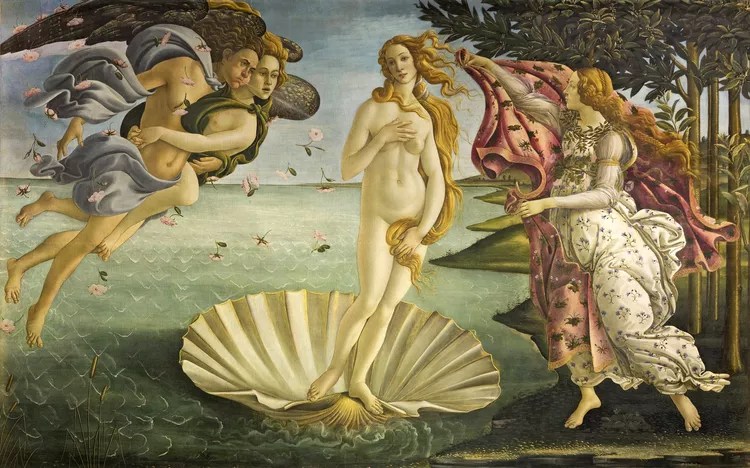
The well-known phrase “men are from Mars, women are from Venus” seems like a cliché meant only for TK Maxx merchandise, but its roots date back to Roman mythology and their take on astrology. It was their belief that Mars was the god of war and Venus the goddess of love. Naturally, the gender roles of the time slotted themselves into place. It occurred to me one day while watching a video about the solar system that the movement and behaviour of the planet Venus draws even more correlation to love than I’d originally thought. Though I might not have a background in science, I’m nothing if not a romantic – so forgive me as I overanalyse the links between Venus and love itself.
Biologically speaking, it’s ironic that we associate the planet Venus with love, given its grueling conditions: an atmosphere hot enough to melt lead and pressure so intense that humans could never consider surviving there. Only feelings of love, hatred and heartbreak could be portrayed as having such stormy and turbulent conditions. Love’s turmoil can sometimes feel just as unbearable (figuratively speaking). Venus’s surface is also covered by thick sulphuric clouds, which create a yellow-y fog preventing visibility of the surface. The unsettling haze is much like the way we become blinded by love. We become unavailable for advice and often unreachable once we are caught up in the honeymoon phase. The images that we do have of Venus are mysterious yet enticing, cold yet alluring.
Further, Venus has the slowest rotation in our solar system. One rotation is 243 Earth days. One solar day (sunrise to sunrise) is 117 Earth days. This means you’d experience just under two days on Venus in one year. This immensely slow rotation, those long drawn-out days, reflects the time it takes for love to really develop. The big loves, the great ones that are worth writing about, take years to grow. This slowness conjures imagery of sleepless nights, losing track of time and walking through a foggy, dizzying dream.
Venus is also Earth’s closest companion. People occasionally spot Venus shining brightly behind our moon, at night or even in the broad light of day. In fact, part of the reason the goddess of love acquired her name was because the Romans wanted to name her after the brightest planet in the sky. But, being fickle humans, in recent history we have mistaken her for UFOs or some impending threat. We are so often fearful of what we don’t understand.
What’s rare is to see Venus eclipsing against our sun. The reason for this is our slightly varying orbiting planes. We are so close, yet missing one another just fractionally – like two people on marginally different wavelengths. Perhaps going to the same places at different times. Crossing paths, but never quite making it work. Venus eclipsing our sun is rather like love – it only happens once or twice in our lifetime, if we are lucky enough to catch it.
This constant play between our planet and Venus reminds us of how small we are. So feel everything deeply, embrace chaos and trust that this is all a part of the cycle. The initial sparks, the rushes of deeper love and the swings of betrayal are all a natural part of living. From a fictional perspective, I like to imagine that the push and pull of the planets are linked to some sense of feeling. That Earth’s movements are purposeful and not just some cosmic repercussion of a huge explosion billions of years ago. We’re not spinning wildly out of control, we’re moving rhythmically with our protective planet, our life source. There are still huge astrological questions left unanswered, so why not theorise on our own?