Sienna Bentley and Ray Leach
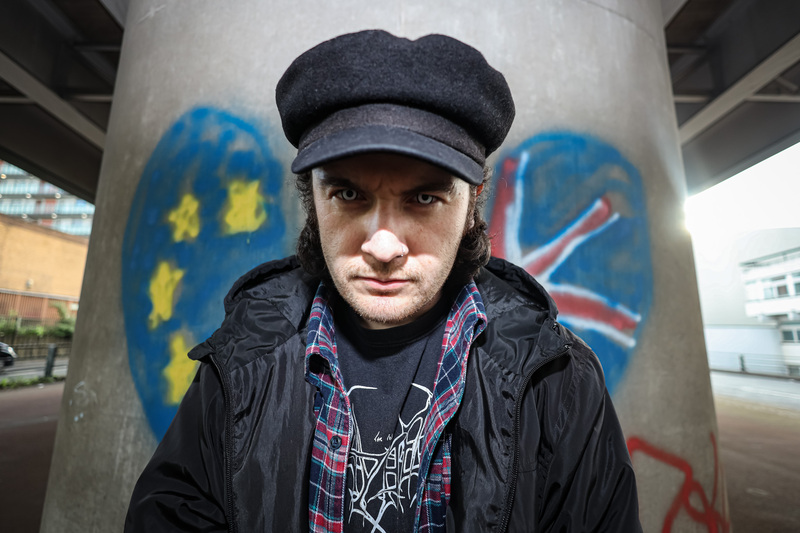
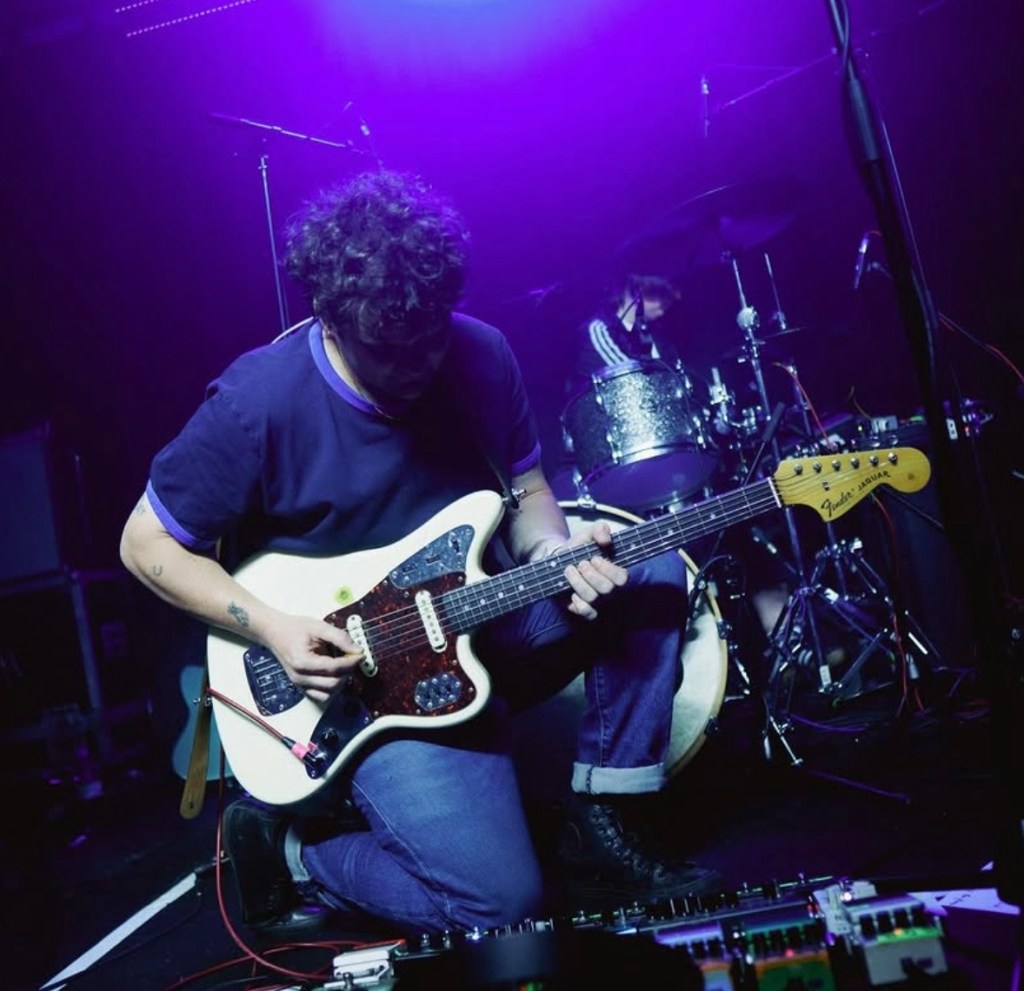
Last – but certainly not least – to join us on our little patch of grass across from Colours Hoxton before their Sunday headline slot at CloseUp Festival, Matt Board, lead vocalist and guitarist for Pale Blue Eyes, gave us a lot to think about. The three of us put the world to rights in a rich and insightful discussion about the reality of being an artist in the UK today.
Not only did we dive into the best bits about zine culture (print is not dead!) and reclaiming creative spaces as collaborative opportunities to meet likeminded artists offline, we were given the honour of naming the band’s car.
We want to say a huge thank you to Matt for his thoughtful and considered answers.
Sienna: Do you do music full time or do you have other work that you do, as well?
Very early on we realised that we needed something else within the music industry that we could do – we always worked in hospitality and bars and we did whatever else we could possibly do to fund our art. Lucy [Board] and I also have a keen interest in producing and we have a studio that we set up in Devon, which we’ve now moved to Sheffield, so we collaborate with and produce for other artists and that’s always run alongside Pale Blue Eyes.
Totnes was an amazing place to grow up, and there’s a pretty amazing creative industry of likeminded people creating really nice work in Totnes. Lucy’s parents are from Sheffield, so we decided to move up north to be a bit closer to it all, and we brought the studio with us. Now we work with other bands, friends or producers who want to use the space. We try to keep it artist-friendly because the whole reason for setting it up was so that we could continue to make art and record our own music, and then other people showed an interest in using it so we try and keep the costs down so it can help them make records as well.
It totally influences our creativity because we learn so much when we record other people’s music that we can apply to our own music and share ideas and collaborate. But we absolutely have always had to have other stuff to run alongside it. I don’t think we quite realised that coming out of university but certainly going back into doing a bit of work in universities, it’s way more of a conversation now where it’s not at all a failure to go into the world knowing that you have to have something else to facilitate the art. Currently, in this country, the arts aren’t funded enough so for you to be able to do it you just find a way, which is why we created the studio because that’s our other interest and Lucy, my wife, the drummer in the band, is an amazing producer and she really wanted to push that side of what she did so we are collaborators in the studio as well as the band.
Sienna: Like you said, it’s definitely a privilege and you have to just go into it knowing that you’re going to have to do other things too, but for me that reflects quite a sad state of affairs. Until you’re in a position where you can – obviously that’s great – you can’t just be creative anymore and have that be your main thing.
No, and you definitely used to be able to. The Arts Council is doing amazing things. I don’t think any venues get anywhere near enough support from the government and more money should be funnelling through. Obviously now brilliant people are making noise about how we need more support because of how much we contribute financially to the culture sector, and how it’s so important for everyone in every walk of life to have access to playing music, learning music, being creative and having the ability to express their emotions in whatever art form they choose – whether it’s music or art or fine art or performance art or whatever.
It’s a very tricky landscape in this country and I think that the real kicker with it is that it’s unregulated. It’s an unregulated industry. It’s like the Wild West. People can get up to stuff. Look at streaming – it’s completely unregulated. It’s wrong, which is why sometimes it’s good to have another thing, because then you don’t obsess over it all the time. You can go and do something else and be creative in another area of your life, or you might have a family and you dedicate time to your kids. All of that stuff is healthy as well, but we’re not allowed enough time to be creative because of the financial pressures and constraints of the overriding problems in this country.
And it affects touring, we really scrimp to get these shows on the road. We’re all crammed into the back of our Citroen Berlingo, which is like, the clutch is gone and it’s dangerous to drive. It really is. And we’re always overweight. God forbid we ever get stopped, because we’re always overweight. But we make it work, and we just laugh about it until the day we don’t.
There’s a lot of financial pressure on really brilliant, beautiful creative minds at the moment, and all of the institutions are doing as much as they can, but the government isn’t finding enough ways to funnel money back through grassroots organisations.
Ray: We had such a relevant conversation with The Slow Country, they were saying that Ireland is making such big shifts and giving funding to artists – why are we not keeping up? It’s so slow and so embarrassing.
It’s bonkers. It’s been like 10 years of mismanagement, and people have been able to get away with things. Indie label models are wrong. We don’t see anything from our first two records because of the first deal that we signed – we were probably slightly naive but excited to get going and get working. It’s all fundamentally wrong. When I’m talking to students in a university lecture now, I tell them “as much as possible, do it yourself. Until you’ve learned this particular version of the industry, which is flawed, just do as much of it you can yourself”. As long as it’s safe and you’re looking after each other in a healthy and safe environment, and you’re not being dangerous like we sometimes are with our driving.
It’s very difficult at the moment in certain areas. Some are better than others, but certainly we’ve had a really mixed, brilliant learning experience of what this industry is, and we’ve come out the other side armed with knowledge through doing, which is really, really cool.
And actually those experiences we had early on with the first two records were amazing, and they made us. I don’t take those for granted because we were given the opportunity to live out a dream and go to all these amazing places and learn how to play gigs in front of people and learn about working models. But fundamentally, parts of that industry structure – it’s like dinosaurs wrote some of those deals.
Sienna: I suppose because you guys are so immersed in music with your studio and everything, you must feel like musicians first before anything else.
Totally. Since the age of 14, that’s all I’ve wanted to do. Since I started properly playing gigs in the local pub, that’s all I’ve ever wanted to do. Same with Aubrey and Lucy and Lewis – they’re so committed to their art, so dedicated. They will literally do whatever it takes, which is really impressive and inspiring for all of us, because we’re like, how are we going to make this work? This is the budget we’ve got. It’s always like, right, we’ll just drive the car here, and get a train there. It’s amazing and inspiring that people are still wanting to do it.
Sienna: That’s so good to hear. So, from a socials perspective, where do you say you draw the line between authenticity and strategy?
We’re not very good at that at all. We just post things, we post about shows and things that engage and interest us, but it kind of passes me by and goes over my head, if I’m honest. Lucy is amazing at it – I think it’s about finding your voice and tone, but personally I hate going through it; there are things that draw my attention but quite honestly I’m disengaging with it more and more. If it’s about finding new ways to strategise, how we can sell a few more tickets to the tour, I literally switch off. Other people are better at it, I haven’t got much time for it.
Sienna: That’s what I think is so interesting because it’s like, you have to. Why can’t you just make art? It’s such a powerful marketing platform, but it’s such a shame that we can’t get away from the necessity of it.
But you know what I love? I love the quietness. I love writers and journalists. I used to buy NME and Sound on Sound. I still buy Sound on Sound. I love books, reading and zine culture. I think it will level out. I just think hyper-stimulation has come to the forefront of our subculture, whereas before there were really gnarly, fun, little youth subcultures that existed. Everyone would choose one and go and hang out at the park like this, and chat about music and art.
I think because of the obvious things like covid and people regressing more into their devices, it’s become more difficult to socialise and people are more anxious. So I appreciate all of those things as well, but for me, it’s having a device that we associate with our business and we take it seriously. Obviously we want to promote things that we’re doing, we want people to come, but it doesn’t play as big a role in our day-to-day strategy of being a band. We just love writing songs and if it takes a little bit longer because we’re having to win over two fans a night from playing 150 gigs a year, I think we’d rather go down that road.
I also appreciate that for visual artists it makes total sense, but it’s another thing that you feel obliged to do. I don’t know many people in the world that we’ve operated in that really take any joy in doing those things anymore.
Ray: You’re right, subcultures get lost because they used to originate around word of mouth and hanging out. My dad was telling me about going to hear a record for the first time – you’d go to the shop and you’d put the headphones on and you’d just experience that record and then you’d take it home. It’s a different experience.
This is why the rebirth of independent record shops and listening parties and in-stores is so exciting. We’ve done some in-stores, we did some for the third record and it was so fun because you’re seeing people, meeting people face to face and having a beer with them afterwards and playing music in unique spaces. I’m all for that. I worked in an amazing record shop in Totnes for like 10 years, and it was all about “we’re doing this listening party and we’re going to get people through the door because we have to be together to listen to this”. Those kinds of meet-ups are so important.
It’s been a very, very gnarly time for this kind of cultural landscape to recover financially from all of the things we had to recover from, and the political structures haven’t helped, the arts cuts haven’t helped. We’re seeing the fallout of that now, but we’re all talking about it, so that’s a great thing, isn’t it? We’re like, “oh, this is actually a bit rubbish, spending too much time on our phones”.
Sienna: What’s the most unexpected skill you’ve had to learn to keep the musical alive?
I can answer for Lucy. She has basically had to become a full-time accountant and learn how to use accounting software – returns and managing taxes – and she’s unbelievable at managing all of that stuff without ever getting overwhelmed. But being your own manager, I guess, all elements, all sides of it, all parts of it. Booking massive tours and trying to understand cultural shifts and language barriers and booking gigs. For big tours it’s scary but immensely fun and I wouldn’t want it any other way.
Sienna: That’s great. So what does success mean to you, in terms of like, what’s the version that you’re chasing as opposed to the industry’s version?
It’s basically self-sufficiency, being able to get closer to what we earn from the band being a larger portion of what helps us survive, and not being exhausted all the time doing it. Having a bit more of a balance between having to dedicate 40 hours a week to the admin side and then rehearsing and writing – which is all a choice, I’m not complaining about any of it because I love it. I cannot and won’t do anything else, but I think it’s that massive cliche of work and life and finding time for both, but self-sufficiency is key.
The more you do this and the more you have these conversations, you meet more likeminded people from labels and promoters. The core group of people that you work with becomes smaller because you work out who the great people are and who the wrong ones are. I remember someone saying about Björk in an article that she loves to know every single part of it and that’s really inspiring, because she writes the music and does it, but she also needs to know all of the intricate details because it’s her art and her life that she’s putting out there. That has always stuck with me whenever I’m like, right, I’ve just got to work out how this tool works within this weird piece of accounting software. It’s not at all glamorous but it’s got to be done.
Sienna: And it’s so much better when you know that you’re the ones doing it, you have complete oversight.
Ray: I respect that. That’s great. Being a master of all the things.
While also often always making fucking terrible mistakes and then having to undo things. But that’s part of it, as well.
Sienna: Yeah, 100%. What’s the most DIY solution that you’ve used to make an idea work?
Probably the Berlingo, in all its glory. In the early days, the first two years where we were driving, we just rebuilt that vehicle so that the three and four of us could tour with all our backline and we could just go to any gig. There’s lots of things, we built a studio so we could make records, applying the kind of historical DIY model to our band.
Sienna: Wow. That car’s gotten you through a lot.
It’s not here today because it broke down on the way back from the airport. We were just like, we can’t. It was kind of starting, and then we thought, we can’t risk it. We’re going to have to splash out on an Enterprise.
Sienna: Has the car got a name? My aunt and uncle have named every Mini they’ve had, and so now I see cars as living things.
Haven’t ever named the Berlingo. You can name it now if you want.
Sienna: Trusty.
We do actually call it “trusty”! There you go. Trusty. Not so trusty at the moment.
Sienna: What can you do in an intimate venue that you can’t on a big stage, and do you feel more exposed or empowered when the crowd is so close to you?
Both are equally as exciting, because in bigger rooms the PAs are bigger so the sound feels like it goes further and we’ve always liked how those big rooms sound with what we do. But the intimate nature of people being close is also inspiring. You take each gig for what it is and they’re both equally as fun. We love in-stores and we also love playing bigger venues.
Sienna: This has been such an amazing conversation, but this is the last question. If you came back to CloseUp next year and you had an unlimited budget, what would you build?
If it was this kind of weather, maybe we’d put a massive tent up here. We’d give money back to the festival so that they could keep doing it. It looks pretty vibey in there, so what Sam [CloseUp Festival organiser] is doing is rad anyway, so just being here and being involved is brilliant. Maybe like an outdoor drinking stage here, like a stretch tentacle tent with loads of festooning, and then a stage at the end, lights.
Ray: It works – these trees, there’s a gap and it lightens up in the middle. That would be magical. We had a couple of people say they would take the money and run, so that’s very honourable!
If it was a blank cheque, I’d give them 50% of it back to put into the festival – or more, as long as we can make the gig work.