Sienna Bentley
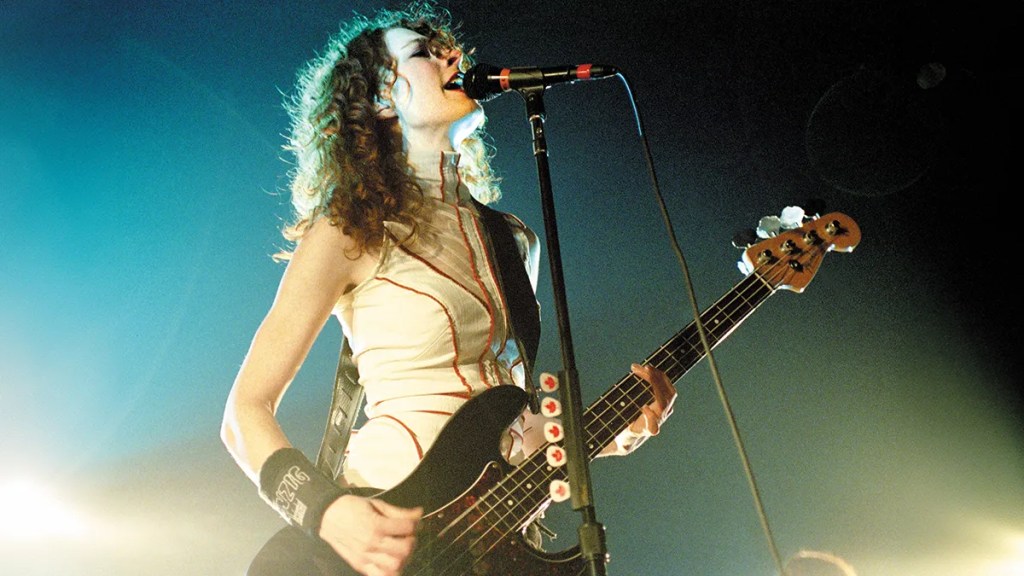
Comprising Katya Birkeland, Lil Christlow, Thea Gundersen, Mia Halvorsen and Maria Tollisen, Norwegian-Liverpudlian band Girl Group are giving the male gaze the middle finger. Born out of frustration at the boys’ club, they’re not interested in presenting a polished and perfected image.
We were lucky enough to sit down with the five friends before witnessing their greatness on the stage at CloseUp Festival, where we talked about their impressive trajectory and the reality of making music in the modern age.
Indeed, breaking barriers is hard enough without adding digital challenges into the mix. Social media can be a real hurdle when it comes to nurturing a movement like Girl Group are. Despite the online sphere being one of the main ways that collectives are born (and grow) in the digital age, remaining true to your art while trying to build momentum against an ever-changing algorithm is one of the trickiest lines to draw – and harder still to maintain.
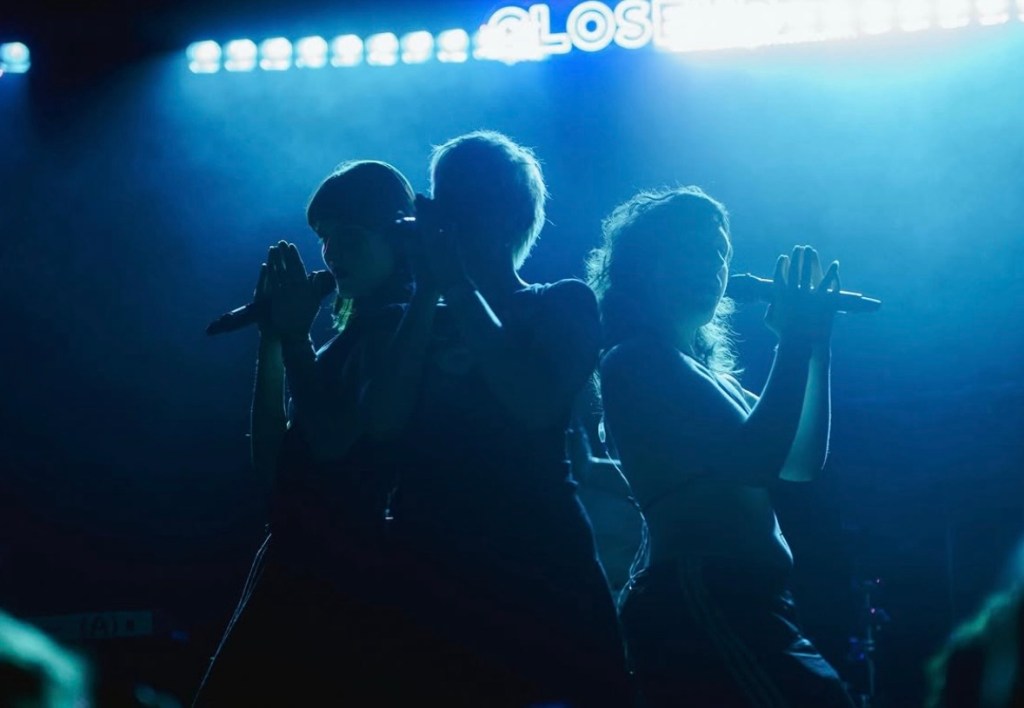
Before their Friday night set (which blew our minds, by the way), we chatted to Girl Group about this tug of war, asking them how they navigate authenticity and strategy – because creating content for social media is an unavoidable task if you want to be an artist these days. It’s endlessly frustrating, getting into creative fields for the love of the art and finding you have to do 10, 15 additional jobs you never saw coming just to get it out there.
“We’re having such a crisis with this,” Katya admits. “It’s so difficult, and it keeps getting harder and harder.”
“What we want to make has a kind of real rawness and we’re trying to be a girl group that isn’t polished and perfect; we want to be real. But then it feels like our entire careers depend on how far the algorithm favours our videos – and the algorithm favours videos where we look really polished. It’s an endless cycle.”
The myth of meritocracy in the TikTok wave
Social media has long marketed itself as a democratising force for creative spaces, where talent can rise and flourish organically. But the sad reality for emerging musicians now is that that promise is being compromised and clouded by a landscape that is less and less governed by quality, and increasingly by visibility metrics.
Girl Group, who met and became fast friends at the Liverpool Institute of the Performing Arts, are acutely aware of how unusual their own position is. While they consider themselves extremely fortunate to be able to focus on music full time, their experience of the wider industry tells a different story. “A lot of bands that I have loved for years are still not living entirely off the music,” says Lil. “So we’re in an insanely privileged position, to be fair.”
Katya echoes this, pointing to the role of luck as much as talent: “As much as I believe in our project and we’re talented, I don’t think it has much to do with that. I think it has to do with a lot of luck, a lot of being in the right place at the right time.”
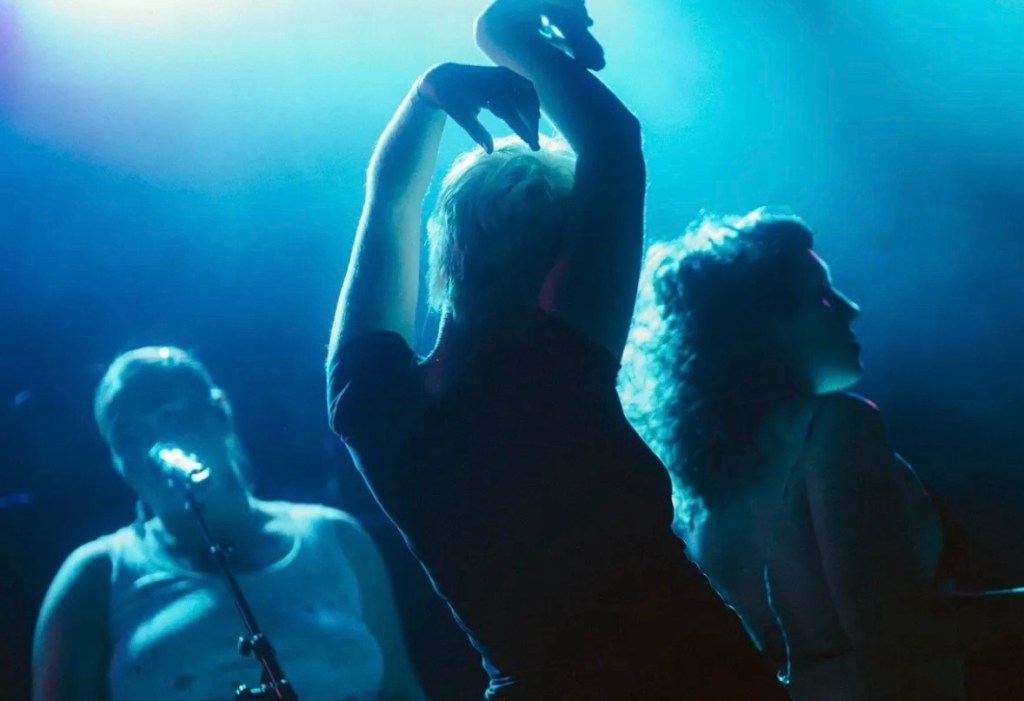
“This has been a proper process for us. We’ve done all the basic kinds of TikTok-y videos, and also ones we feel more proud of and ones we actually feel we can get creative with, which has been nice,” says Lil. “But it’s just absolutely insane that we live in a time where it feels non-negotiable. Even for artists where a few years ago you wouldn’t have thought they’d be doing TikTok, now they are.”
It is insane. And going too far that way, getting bogged down in the necessity of it all, risks abandoning your authenticity, instead making art that is catered specifically for the algorithm. Increasingly, songs are not just written to be heard, but engineered to be clipped, looped and shared. “If you stray too much into algorithmic styles, that also damages your career in a way,” Katya says.
“Now, you have to find and make part of the song that will resonate with people,” Thea chimes in.
You have to think tactically, even though the work as a whole deserves to shine. So where is the line?
That’s the problem I have with this: feeling compelled to win over attention spans and create music primarily for virality purposes. Short clips that go viral often leave the rest of the track hanging. Call me cynical, call me harsh, but where’s the artistry in that? Artists should feel confident that the work can stand by itself, rather than focusing on creating a specific 15-second hook that people can make up a dance to or that becomes the soundtrack to a temporary trend. The artwork is no longer primary.
And it’s not the artist’s fault; the market is so overwhelmed with talent that just getting a word in edgeways caps the sense of freedom that artists have to promote their work in their own way.
Girl Group have felt this pressure. “We’ve had that… where some songs when they’ve been finished [are] the favourites and these are the best songs for social media,” Katya says. Creativity becomes fragmented; it’s a push and pull between what feels artistically fulfilling versus what might perform well online.
Maria articulates the emotional cost of this split with blunt clarity: “When you start, you’ve got this dream, which is doing art and living off it. But I’m slowly realising that they’re separate things. In order to make art, you have to feel free. But if you want to live off it, you have to not be free.”
“It’s a very little box you need to fit into, and there are certain things that you need to sacrifice and do to be able to do that. We’re always talking about where we want to place ourselves on that spectrum of wanting success and wanting to live off it, but wanting to be true to our art. It’s really, really tough.”
Determining who, not just what
Beyond shaping how music is made, the algorithm also determines who gets to succeed. Katya points to a worrying trend towards visual conformity, one that privileges a very specific, often “polished” aesthetic.
“I just think it’s so dangerous and really threatening to the quality of music and art,” she says. “If you’re not, realistically, really traditionally male-gazey pretty, you can’t do well. And that’s so damaging – both to the general public in terms of who we look up to and who we make famous, but also the quality of art and music and the future of it.”
Girl Group have made it their mission to bring women together and get them to believe in themselves – they actively work against the concept of the male gaze. With a certain aesthetic being pushed more and more online, it feels like they’ve got to work even harder.
The art of adapting: striking the balance
The reality is that being an artist now necessitates learning new and unexpected skills that aren’t about the music at all – including an ongoing and often relentless commitment to content creation. For Girl Group, this manifests in both practical and absurd ways. “How to add TikTok lyrics onto screens super fast in the car before a show,” they joke. “How to find a signal to post wherever you are. How to beg Mia to use her hotspot.”
“I think deep down we’re willing to do whatever it takes to keep doing this forever, because it’s just so fun and it is the dream,” they agree. “But then it’s like, how do you know when it starts to negatively affect your brand and what kind of people listen and care?”
Despite these pressures – and perhaps my cynical tone – Girl Group insist that it’s not all bad news. They acknowledge the opportunities that social media affords, particularly for unsigned artists. “There is a good side to it… being so accessible now. I love some of it, I think some of it is incredible,” Katya says. “Some people are absolutely smashing it… I have seen so many small artists coming up with all these concepts for social media content and making super sick videos and photos.”
“It’s finding that balance which is so difficult,” she reflects. “It’s a constant conversation.”
I think (because offering unsolicited advice is my passion), as hard as it sounds and is to do in practice, you simply have to ignore the noise. Focus on what feels right for your project and do whatever the hell you want. That authenticity will shine through and attract the right audience that resonates with what you’re trying to communicate.
“We have found something that works for us and we feel comfortable doing that. It’s just about finding what works and what makes you feel good and comfortable,” Thea concludes.
Ultimately, it all comes down to the core message you’re trying to convey, and for Girl Group, that is encapsulating the female experience, raging against the machine and being yourself – all while having fun. “Because we’re a feminist band, we want to start… conversations around the things we’re talking about,” Lil says. “If we can do that on a big scale, then that would be a complete success.”
“We’re so disconnected… a lot of the time with social media and numbers and statistics,” Katya says. What matters is something the algorithm can’t provide: “actually meeting real faces and people being like ‘I care about this’”.
“Literally doesn’t need to be a full room either – just speaking to, like, four people, I’m like, that’s fucking crazy.”
It’s in these moments that the algorithm just doesn’t fucking matter.
If it’s not obvious already, we’re big fans. Maria’s version of their song ‘Yay! Saturday’ was on repeat in my headphones for pretty much the entire two weeks I was alone in Korea last year.
Since CloseUp Festival (mere weeks ago), we’ve seen Girl Group not once, but twice.
Their latest single, ‘Food Shopping’, came out on 5 June and is an achingly beautiful reflection on home, growing up and becoming your own person.