Cece Nannar
Part I: The day the world stopped moving
Today marks the one-year anniversary of “bass-cessation”, as it was cleverly coined by the media. It was a strange day.
The world itself didn’t stop moving – the earth continued its rotation, the bass guitar did not explode or combust. No instruments were harmed in the making of the uprising. No press releases or manifestos were published. Instead, there was simply a collective recognition that if things were to continue the way they were, the women holding it together would have to stop holding it together.
It happened on a Tuesday.
Tuesdays usually lack canon events. Monday eases into the week, dusty from the weekend. Wednesday is the hump, as everyone slowly realises they have failed their weekly resolutions. Thursday might as well not count at all due to the potential of a liquid lunch. Friday and Saturday… I mean, need I go on? Sunday is saved for the slow-motion dread of Monday. But Tuesday, that is where safety and stability lie.
I remember this Tuesday specifically, as my own mother was one of the women holding it all together. I was a fly on the wall during one of her rehearsals with her band, Tax Wound, when she suddenly unplugged her bass, threw her tote over her shoulder and told me that she was hungry and wanted to grab some lunch. We walked out, making music history. Over the past year, I’ve been trying to make sense of how her quiet exit replicated itself 4,000 times over.
Part II: The specific moment
One rehearsal studio in North London was occupied by a band called Lucky Strike. Miles Steele on guitar and vocals, Arun Turner on drums and Elena Crash on bass. Their sound blended the rawness of Husker Du and the despair of Nirvana with lyrics that held the emotional gravitas of Lou Reed and Fiona Apple.
Lucky Strike had been extensively courted by independent labels, after working their way up from playing venues where the staff outnumbered the audience to venues with proper green rooms and festivals that people actually attend.
Miles had the kind of face that looked perpetually wounded, as if he had just been broken up with but simultaneously had had to do the breaking up. It was a strange look, one which appeared as if he was constantly going through something. Arun was a very pretty boy with brilliant brown eyes and swagger that belonged on the front cover of the latest “in” magazine.
Over the weekend, Miles and Arun had watched a documentary on the vulnerability of performance. Miles decided their song needed “more rawness” and Arun agreed. This translated to Miles attempting guitar techniques he didn’t understand, with Arun hitting every cymbal with blind panic, overcompensating for the chaos Miles was creating.
It was at this moment Elena understood that she was the only thing still working. Miles and Arun had destabilised the groove she had spent weeks establishing, all for a moment of “rawness”. Their freedom depended on her restraint. She knew which songs needed to be dropped when Miles’s voice was going, and which ones Arun would play too fast when he was nervous. None of this appeared in the photographs. None of this was called “songwriting”.
She looked at the strained faces of the boys: totally absorbed and somehow completely unenthused by the song they were supposedly trying to save.
Suddenly, Elena turned.
She gave them an on-brand eyeroll, slipped the bass strap over her head and rested the instrument on its stand.
“What are you doing?” Miles asked.
“I’ve stopped.”
“Yeah, I know. Can we go again from the second verse?”
“No. I’ve stopped.”
Elena picked up her coat. “You’ll work it out,” she said.
It was the first time in four years she had allowed them to.
Part III: The echo chamber
Elena did not tweet about this or post a ceremonial photo of her Fender Jazz bass resting against the Marshall stack. Instead, she simply walked out into the crisp North London air, put in her headphones, shuffled her “October 2025” playlist, and took the tube home.
But rock and roll, it turned out, was suffering from the exact same fracture everywhere at once.
It started as a trickle on local musician forum boards at 3:51pm. “Does anyone know why the bassist for The Subterranean just walked off stage during soundcheck at The Lexington?” By 5:15pm, it was a regional anomaly. By Tuesday night, it was a global blackout.
As it happened, thousands of women from Melbourne to Minneapolis had spent that exact same afternoon staring at the back of a frontman’s head, listening to a drummer overcompensate for a lack of rehearsal and realising their spines were tired from carrying the weight.
The media scrambled for a narrative – a hidden WhatsApp group, a secret Discord server… but they found nothing. There was only collective exhaustion. Elena’s exit wasn’t a solitary act; she was the first in a 4,000-piece orchestra suddenly choosing silence.
Part IV: The interview
The BBC, alerted to what they perceived to be a potential “human interest angle” on a cultural phenomenon, got a camera crew down to Lucky Strike’s rehearsal space and requested an interview with Elena. They had their leading entertainment correspondent, Todd Winter, conduct it. Todd was a warm and charming fellow, whose previous interviews with Paul McCartney had yielded revelations on the specific way that George Harrison’s genius had been overlooked, and to whom PJ Harvey confessed she had spent years in the shadow of Nick Cave. It was clear he was an interviewer who could grab musicians on the cusp of a breakthrough… or collapse.
The interview occurred three weeks after Elena had stopped.
Todd Winter: So, what was it that day that made you stop?
Elena: Um, I guess I’m not too sure. Um, you know that feeling when you have social plans the next day and you know it’s going to be exhausting – that kind of weird pit in your stomach, that strange churn of acid, that comes from knowing you’ll have to, I guess, manage people’s emotions and kind of anticipate the needs of others? That particular brand of fatigue that comes from knowing you’ll just have to be on?
Todd: Wow, I mean, that description has pretty much hit the nail on the head of what I – and what a lot of people – can relate to. This feeling of wanting to… opt out?
Elena: Exactly, Todd. Yes. It was that but worse. Because I realised it wasn’t about one day of social performance. It was the understanding that I had been doing it for four years. That my entire participation in this band has been a form of… um… God, it sounds harsh, but… invisible labour.
Todd: In a way that the industry doesn’t really allow for–
Elena: I wrote basslines, I held things together, I kept things steady. I just feel like I did it so well that no one noticed. No one noticed so I became kind of transparent. The groove just became. The groove just was. It wasn’t me, Elena, holding the song down. It was just how the song went.
Todd: But you were there, you were a hero for so many young girls–
Elena: I totally hear that and I really do appreciate that, but… I mean, come on, I don’t want to have to defend my love for everyone that has shown us love. That’s not what this is about. I felt like I was there, in this band, as a foundational element. Like a load-bearing wall in a house. And for four years, I accepted that role because I believed in the music, and because I’m a woman who plays bass in a male-dominated band, and because… because I think women are socialised to accept this exact arrangement. We are built to be the infrastructure.
Part V: The theory
To understand why Elena and four thousand other women made this decision, we must first understand what sociologist Mary Ann Clawson calls the “gendered division of labour in rock performance”. Women bassists far outnumber female drummers or guitarists, with Clawson’s research suggesting this happens due to the cultural understanding of the bass’ place as a support instrument. Supporting roles have been historically gendered female.
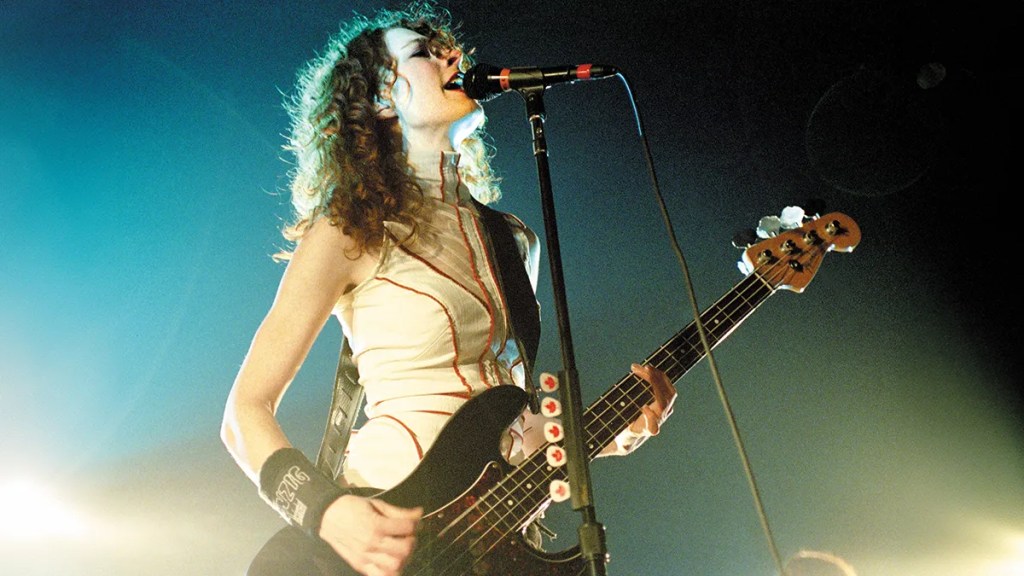
Female bassists are in a peculiar position, as Elena pointed out: she is visible, but her music is about disappearing into the groove. She is holding things up so someone else can be the true expression of male anguish.
Take Tina Weymouth (Talking Heads), Kim Gordon (Sonic Youth), Kim Deal (Pixies), Sara Lee (Gang of Four), Melissa Auf de Maur and D’arcy Wretzky (both of The Smashing Pumpkins), all these women share a specific quality of being the steady ones, the adults in the room. Well, this time, the adults are talking.
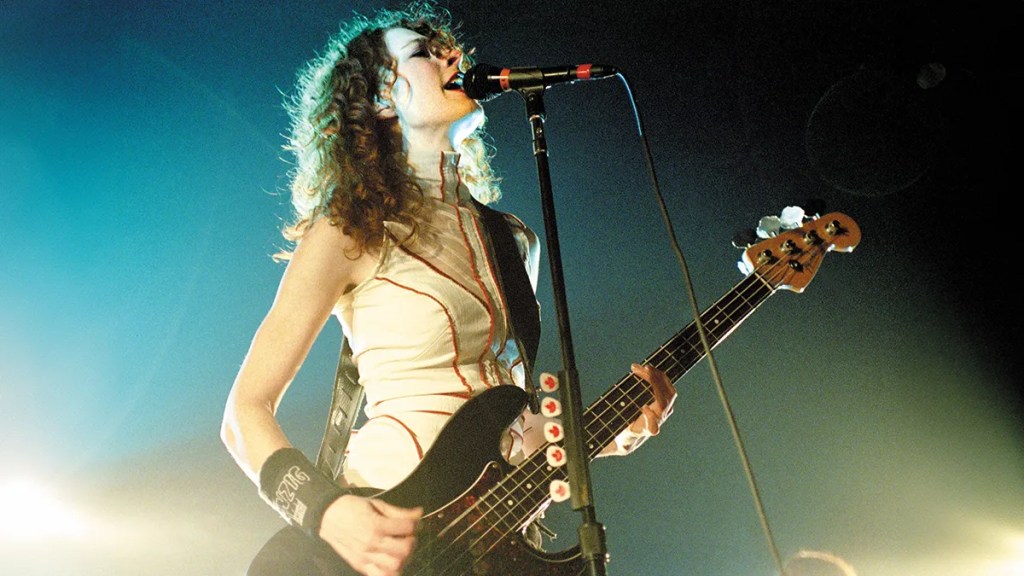
Clawson’s point tells us the pattern isn’t simply about who happens to choose which instrument, but what kind of behaviours are rewarded. The supporting player is expected to listen and accommodate, while the lead player is permitted to interrupt and demand attention. In Lucky Strike, this expectation had become so ordinary that Elena found herself becoming smaller so Miles could become larger.
This mass departure quickly revealed a deeper replacement problem.
Miles tried three different bassists in four months. The first played a five-string bass with a strange thumb technique that was “physically painful to watch”. The second had learned from YouTube tutorials and was determined to make the bass a flashy new instrument. The third kept changing Elena’s part because as he put it, “there’s loads of empty space here”. The struggle birthed the defining phrase of the era, first moaned by Miles during rehearsal with their third try of a bassist: “Come on man, WE CAN’T ALL BE FLEA!”
The phrase became a viral soundbite, with every news publication writing think pieces about masculinity and performance anxiety.
There was a fundamental incomprehension that characterised the male response to bass-cessation: men could not understand why anyone would choose a role that required them to be less visible.
This is not men’s fault, necessarily. It is the result of something deeper.
Part VI: What the men could not understand
Flea, from Red Hot Chili Peppers, has created a mythology around the bass in which the instrument is a vehicle for technical dexterity and ego-driven performance. Flea was famous and seen – and every man who picked up a bass understood this to be its model: not support, but spotlight. The problem is that a rock band cannot have four lead instruments. The moment everyone tries to be Flea, the entire structure falls apart.
The women did not apologise, come back quietly or accept half messages or promises of future consideration.
These days, Elena Crash is not waiting for an invitation. She has created a new system, far more powerful than being a theorist. She writes basslines for musicians around the world. She receives substantial fees and co-writing credits. The Guardian and The New Yorker have done features on her, with young female musicians citing her as an inspiration for her refusal to suffer.
Lucky Strike eventually reformed with a female bassist named Sophie, who negotiated a contract that gave her equal say in creative decisions and equal compensation. The album they made was different, but better. Far better. It charted and appealed to a wider audience. Lucky Strike’s music mattered even more due to everyone’s contributions. The foundation was not hidden behind the frontman’s emotional performance. The band is an actual band and not a vehicle for a man’s ego with a woman driving it. In interviews, Miles repeatedly described the new process as “more collaborative” until Sophie interrupted him on live radio to point out that collaboration was not new; recognising it was.
Part VII: One year later
A year after bass-cessation, Elena went to see Lucky Strike. Before an old song, Miles awkwardly introduced it. He credited Sophie for the new arrangement, paused, then said the original bassline had been Elena’s. It was not an apology, nor was it enough to make Elena want to go backstage. It was simply the first time she heard him say it out loud.
The song started and Elena waited. The bass came in exactly where it always had.
This time, everybody heard it.
I guess we can’t all be Flea. And thank God for that.
Check out Cece’s Substack here